Hawaii Faces Severe Flooding Impacting Farmers and Crop Supplies
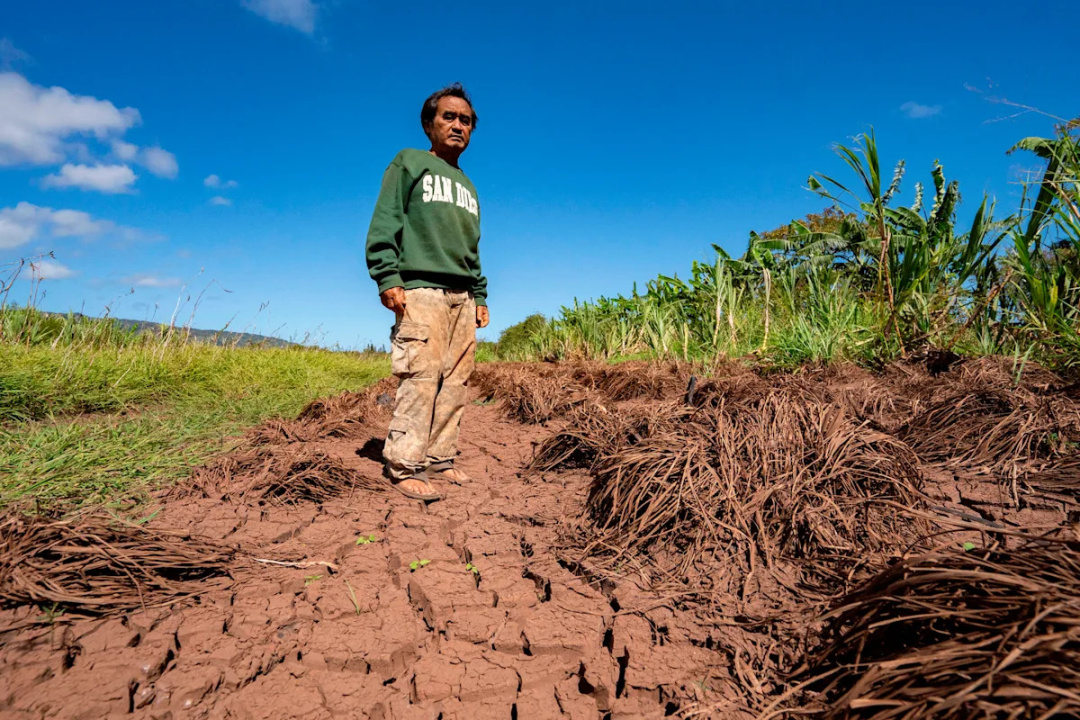
Hawaii is grappling with the aftermath of severe flooding, the worst the state has seen in 20 years, which has left many farmers struggling to recover. On Oahu's North Shore, where small farms contribute significantly to the local food supply, the impact has been particularly harsh. Farmers like Bok Kongphan have seen their crops, including lemongrass and cucumbers, buried under reddish-brown mud, while his niece, Jeni Balanay, has lost her choy sum and other vegetables. The flooding, caused by back-to-back storms in March, has led to extensive damage, with estimates suggesting losses of around $50 million across nearly 2,000 farms.
Brian Miyamoto, executive director of the Hawaii Farm Bureau, noted that some farms were just days away from harvest when the floods struck, forcing them to start over. The devastation has prompted officials to emphasize the importance of local agriculture for the isolated islands. Historical reliance on large-scale plantation agriculture has shifted towards smaller, diversified farms, which have become essential for local markets.
Despite recent support initiatives aimed at bolstering local agriculture, including infrastructure funding and farm-to-school programs, many farmers face ongoing challenges. The majority of Hawaii's farms report annual sales of less than $10,000, making them vulnerable to disasters. Unlike their mainland counterparts, many Hawaiian farmers do not qualify for crop insurance due to the small size and diversity of their operations.
Kongphan, an immigrant from Thailand, is seeking government aid to recover from the flooding, which has left his farm in disarray. He and other farmers are exploring available assistance options, including federal disaster relief and state loans. Balanay, who has been helping navigate the recovery process, expressed uncertainty about the future of farming after witnessing the devastation firsthand.
The flooding has compounded existing challenges for Hawaii's farmers, who are also dealing with wildfires, pests, and volcanic activity. State agriculture officials are working to reassure farmers about soil safety and are providing seeds and plant starts to help them recover. However, many farmers are struggling to reach markets, and those who do have significantly reduced supplies. For instance, farmer Kula Uliʻi reported that her family is bringing only a quarter of their usual output to markets, raising concerns about their ability to fulfill grocery store contracts.
As the community rallies to support affected farmers, the resilience of Hawaii's agricultural sector will be tested in the coming months. Officials stress the need for farmers to persevere, as their contributions are vital to the state's food security.